The Record Eagle’s 2026 INFLUENTIAL WOMEN OF NORTHERN MICHIGAN
Several amazing women were selected for this honor this year. Among them is our own Executive Director.
Susan Pocklington
Executive Director, Sleeping Bear Forever
 How does your current role allow you to make a positive impact on the people and communities you serve?
My role as Executive Director of Sleeping Bear Forever (formerly Preserve Historic Sleeping Bear) gives me the opportunity to make a lasting impact by preserving the places, landscapes, and stories that define one of Michigan’s most treasured national parks. Every historic property and landscape preserved, guided tour, educational program or event that I oversee, helps inspire stewardship, and ensures that future generations can experience the rich cultural and natural heritage of Sleeping Bear Dunes.
With over 360 historic structures and landscapes, listed on or eligible for the National Register of Historic Places – including the largest agricultural community fully protected in the nation – our role as an official park partner helps fill the gap between the available resources of the park and its preservation and interpretive needs, from the mainland to the Manitou Islands. I work with volunteers, donors, National Park Service staff, and community businesses around this shared purpose. Together we protect the character of Sleeping Bear while creating experiences that foster stewardship, learning, and enrich people’s lives.
Preserving a place also strengthens the community. Our work supports heritage tourism, celebrates local history, creates volunteer opportunities, and builds pride in the region we call home.
What’s a moment – big or small – that best illustrates who you are and why you’re passionate about serving your community?
It might be in 2004, after funding rehabilitation of the historic Olsen farm in the park’s Port Oneida Rural Historic District when we opened its doors to the public for the first time as a park visitor center. Several people stepped into the doorway and I watched their eyes tear up with the same story. After 30 years of driving by the slowly deteriorating farm and adopting it emotionally, they were moved with gratitude that it had been restored, and that they could finally go inside. That’s when I realized many people care deeply and have a natural affinity for these places as I do. Or, perhaps it was changing the life of a nine year-old boy who was introduced to traditional trades during the Port Oneida Fair by one of our volunteers. Nine years later, after further mentoring with us, he considers traditional trades to be his calling in life. Or, just yesterday someone wrote to us about their recent horse and wagon tour saying, “ it’s one of the best things we’ve ever done at Sleeping Bear Dunes!” These are all clues that these places, and the work I and our team are doing – matters.
What aspects of your role challenge and inspire you the most?
The challenge is raising awareness of Sleeping Bear’s cultural gems tucked in a park known for its obvious natural resources, and elevating them to the same level of community investment and visitor engagement. It’s about more than preserving buildings and landscapes – it’s helping people fall in love with this place and the stories behind it.
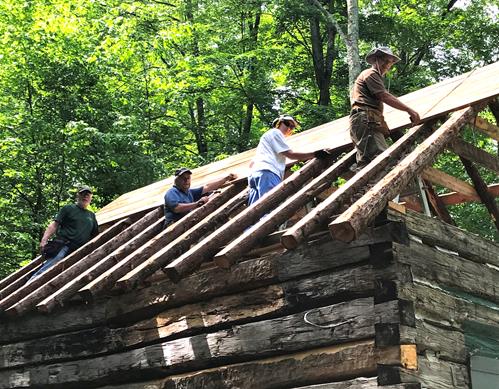
That challenge is also what inspires me—sharing how rare this heritage collection is in the country, and bringing people together to care for these amazing places by connecting them to the resources through historic preservation projects, creative programs, and events. Every day I am inspired by the dedication of our volunteers who donate their time, expertise, and physical effort to repair, restore, or rehabilitate these buildings, gardens, orchards and fields; open the doors to greet visitors to the Port Oneida Heritage Center, or interpret at an event.
Whether someone is helping restore a century-old barn, learning a traditional craft, attending a talk, exploring maritime history on the Manitou Islands, enjoying our exhibits, or taking a bike tour of Port Oneida, these connections inspire them to become part of preserving something that will endure for future generations. That combination of preservation, education, and community-building makes my role both a privilege and a responsibility.
Is there an accomplishment or initiative you are most proud to have been part of?
In the early years of our organization, our team successfully advocated a change in the park’s direction – saving these cultural landscapes from demolition and moldering, to this large effort of preservation. With Sleeping Bear Forever’s 28 years and over 80 preservation projects and many programs, it’s hard to pick just one! Others would certainly be the rehabilitation of the Olsen farm into the Port Oneida Heritage Center and development of its exhibits; moving the Goffar barn out of Lake Narada; and restoring the Katie Shepard Hotel on North Manitou Island for potential rustic accommodations. What opportunities do you see to make your impact even stronger over the next decade?
After decades of intense focus on preserving buildings so they are not lost, we are expanding. We started our new Folk & Field School this summer to preserve and teach traditional trades. I am looking to work with local schools more in engaging youth. And the biggest initiative is entering a new chapter of adaptive-reuse of historic structures. I am excited to be working with the park in progressing toward this goal. If this project comes to fruition, it will be a big lift for fundraising, opening up more historic properties that will ensure longterm maintenance of historic properties, offer more places and opportunities for the public to enjoy, and add resources and jobs to our local community. This project will create an even stronger impact in helping the park meet its goals.
“It’s about more than preserving buildings and landscapes – it’s helping people fall in love with this place and the stories behind it.”

 Official Partner of the